Wednesday, July 17, 2019

WEEK 13

Hello there earthlings!!! This will may be my last ever post for this semester because we have come to week 13 already. For this week, we were getting evaluate for our project.

We were really nervous to give the presentation in front of our lecturers but Alhamdulillah our project was approved.


This is a picture of our project.


Our group members

WEEK 12

Hello there we are getting near to week 14th which is the end of the Field activities. For this week, the students from Part 1, 2 , 3 and students from Degree gathered at the main roll-call place for Planter's Award and Roll-Call Talk.

For the Roll-Call Talk, a representative from each part gave a speech about the current issue of agriculture. The best speech was given to the representative from the Degree student.
The Planter's Award was given to the chosen students.


WEEK 11

Hello there readers of my blog !

 For this week activities, we were discussing about out project. We were divided into two groups in each class. I was in Group A with other 12 members.

We were given a task to make a project to use for nurseries.

Our group members discussing about the project.


WEEK 10

Hello there my fellow earthlings! I could not believe that we have come to the 10th week already. Just how fast the time flies. If you want to know what we did on the 10th week,read on.
For this week, we were given a briefing about culling/grading. 


Culling is one of the most important procedures to be carried out in the nursery to ensure that only the most uniform and vigorous palms that are likely to give the highest yields are planted in the field.
Four rounds of culling are recommended during the nursery period. In addition, a final round of selection should be done just before field planting.

FUNCTIONS
a. To allow only normal healthy seedlings to grow.
b. To remove all runts, abnormal and unproductive seedlings.
c. To supply the best quality palm available for field planting.

Method : Cut the seedlings and bring it to a certain place and the land is recycled.

Culling at the pre-nursery stage is carried out at month 2 and prior to transplanting the main nursery at around month 3 to 4.
This is one of the main advantages of the double stage nursery system where the first stage culling of undesirable palms can be done stringently and quickly over large number of young seedlings. 

The main types of undesirable seedlings (should be culled) at this stage are as follows: narrow (grass leaf), rolled leaf, twisted leaf, crinkled leaf, collante and stunted or weak (runts) palms. 


Culling in the main nursery should be carried out when the seedlings are 7 months and 9 months old while the fronds of neighbouring palms have not started to overlap and etiolation not set in to mask the runts. The typical characteristics of abnormal seedlings in the main nursery are as follows: –

Erect, flat top, broad pinnae, narrow pinnae, wide internodes, juvenile (slow to pinnate), weak and slow growing (runts), crinkled leaf, collante, chimaera, badly diseased (helminthosporium, curvularia, blast, crown disease) and palms badly damaged by chemicals.             
                                             
                                                       Chimaera
Narrow pinnae
  • WHY IT HAPPENS? 
  • Insufficient water 
  • Diseases
  • Lack of nutrients

 HARDENING PROCESS
  • From polybag to soil 
  • To introduce harsh environment to the plants
  • To reduce pest
  • Increases possibilities so that the plants can survive
CALCULATION EXAMPLE

1 tree = 1 kg              1 sack = 50 kg 

1 sack / 50 kg = kg / 143 trees  = (143 trees / hectare) x 500 hectare
                       = 1430 sacks

1 hectare = 100 m x 100 m
               = 10000 meter square

We were discussing and trying to solve the calculation.


Our day ended with us gathered to gave a farewell to the Vice Rector for her resignation.

WEEK 9

Hello again, for this week we will be looking into Pesticide Calculation.  Our lecturers showed us the types of pesticide and the pesticide calculation.


What is pesticide?
The word pesticide are derived from the Latin word Pestcida. Pest ( unwanted organism) and cida ( kill or cut) are substances that are meant to control pests, including weeds.
In general, a pesticide is a chemical or biological agent (such as a virus, bacterium, or fungus) that deters, incapacitates, kills, or otherwise discourages pests. Target pests can include insects, plant pathogens, weeds, molluscs, birds, mammals, fish, nematodes (roundworms), and microbes that destroy property, cause nuisance, or spread disease, or are disease vectors. Along with these benefits, pesticides also have drawbacks, such as potential toxicity to humans and other species.


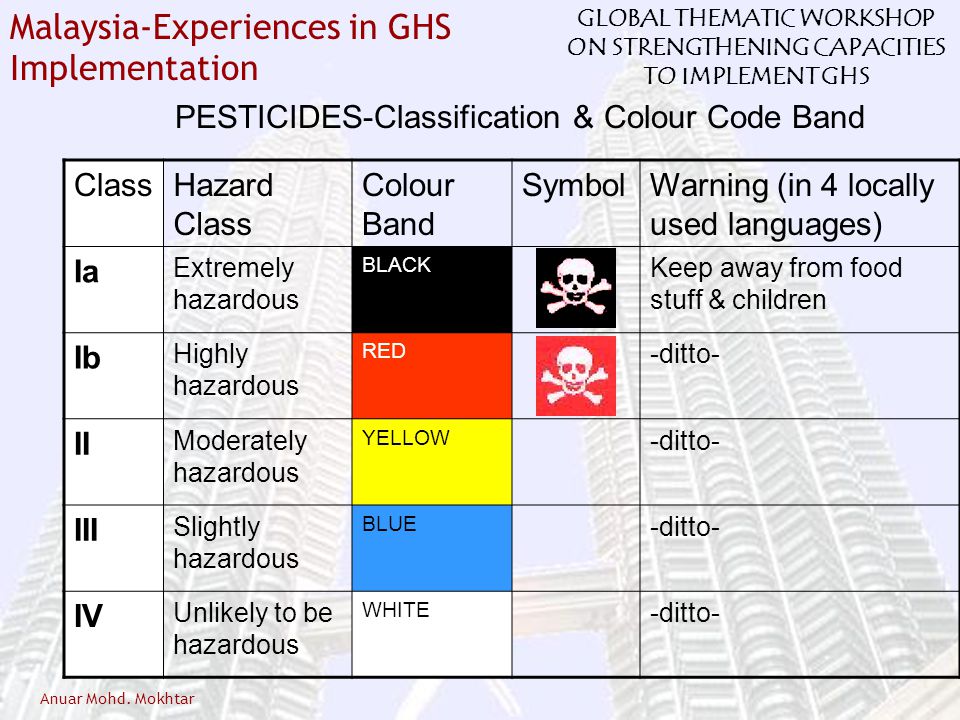
Image result for classification of pesticides
The classification of Pesticides

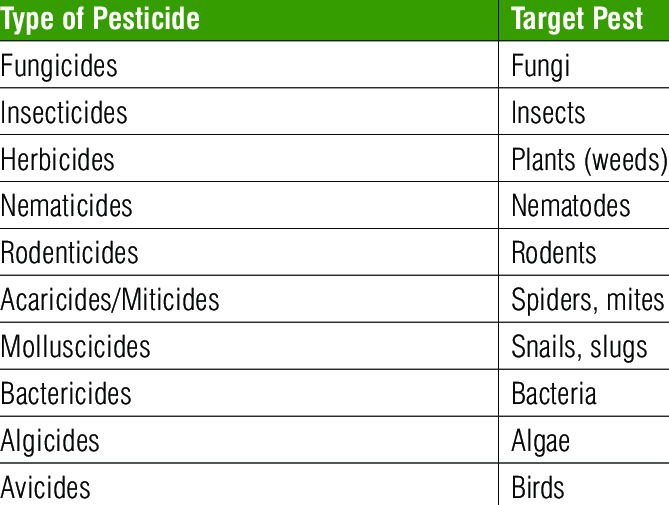
Image result for types of pesticides
Type of pesticide
                                       

Pesticides can pose hazards to humans. The severity of a harmful effect or poisoning depends on the pesticide’s chemical makeup and formulation, its path into the body, the amount that enters the body, and the length of exposure. Before you start spraying pesticides, you need to wear Personal Protective Equipment (PPE). By wearing this it can greatly reduce the potential for dermal, inhalation, eye, and oral exposure, and thereby significantly reduce the chances of a pesticide poisoning.


Image result for PPE while pesticide
 PPE includes such items as protective suits, footwear, gloves, aprons, respirators, eyewear, and headgear


Students spraying pesticides around the rubber field.

PESTICIDE CALCULATION

1) SPRAY VOLUME PER HECTARE 

     SWATH WIDTH (m)          NOZZLE DISCHARGE (l/min)        WALKING SPEED (m/min)
  • Nozzle diameter                -Pump for 1 minute.                           - after 1 minute
     = (Nozzle discharge l /min) / (Walking speed) swath width x ( 1000 meter square / 1 hectare )

2)   C1V1 = C2V2

    C1 = % of formulation ( On the label )
    V1 = X
    C2 = % of AI  (active ingredients recommended) 
    V2 = Spray volume per hectare
 
Example :
       Swath width / 1.2m                      Nozzle discharge / 1.5 l/min

Walking speed = 46.4 m/min                 1.5 / 46.4(1.2) x 1000/1 = 269.4 liter per hectare


From this week learning, I have learn how to calculate the pesticide that is needed in a certain area.

WEEK 8

Hello there earthlings, we have yet meet again for the weekly report of my field activities. For this week activities the lecturers had briefed to us about Pruning. If you want to learn more about pruning,read on.

Pruning involve the selective removal of certain parts of a plant, such as branches, buds, or roots. Reasons to prune plants include deadwood removal, shaping (by controlling or redirecting growth), improving or sustaining health, reducing risk from falling branches, preparing nursery specimens for transplanting, and both harvesting and increasing the yield or quality of flowers and fruits.

We were given an example of pruning which is Root pruning. Root pruning is the process of cutting back long roots to encourage a tree or shrub to form new roots closer to the trunk (common in potted plants too). Tree root pruning is an essential step when you are transplanting an established tree or shrub. 
Pruning tree roots before planting reduces transplant shock when the moving day comes. Root pruning trees and shrubs is a process intended to replace the lengthy roots with roots closer to the trunk that can be included in the root ball.

There are some advantages of pruning, which is pruning can improves sunlight penetration and increase air movement through the tree. Pruning also develops the structure of the tree so that it can support the crop load. 


The lecturer briefed to us about pruning and transplanting.
Then, we were briefed about Transplanting. Transplanting is the process of removing a plant from the place where it has been growing and replanting it in another. The major requirement in transplanting (especially of larger plants) is a sufficient water supply, since the roots are almost inevitably injured in the process. Transplanting uses double stage.

In the first stage, 2 - 4 months can transplant from small polybag ( 6 x 9 inch) to big polybag ( 15 x 18 inch ).

  1. Watering
  2. Prepare big polybag with soil medium
  3. Sandy Clay Loam ( best soil) for 2 cm
In the second stage :
  1. Remove the polybag
  2. Make holes
  3. Put fertilizer 
  4. Fill up the soil
  5. Apply mulching

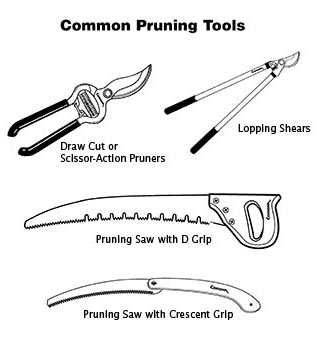
Image result for tools for pruning
These are a few pruning tools


The student is guided by the Planter's Executives the way to prune the Oil Palm Tree.

WEEK 7

Hello there earthlings! We meet again. In the previous week, we have learned about fertilizer application. For this week, I will tell you guys about the propagation technique.
 But before that, I want to tell you guys that our day started with a speech from the DPIM alumni Mr Farid Zainal from FELDA. 

Mr. Farid Zainal shared with us about his experienced from learning in UiTM Arau Perlis to his various working experience.

Mr.Farid Zainal gave a speech about his experienced.
                     Now, let us get started with the main topic for this week which Propagation technique. What is plant propagation? Plant propagation is the process of growing new plants from a variety of sources: seedscuttings, and other plant parts. Plant propagation can also refer to the artificial or natural dispersal of plants. There are some technique that is used for propagation ; Budding, stem cutting, grafting, marcotting and layering. 

Layering

Stems still attached to their parent plants may form roots where they touch a rooting medium. Severed from the parent plant, the rooted stem becomes a new plant. This method of vegetative propagation, called layering, promotes a high success rate because it prevents the water stress and carbohydrate shortage that plague cuttings.

Grafting
Grafting is a method of asexual plant propagation that join plant parts so they will grow as one plant. These techniques are used to propagate cultivars that will not root well as cuttings or whose own root systems are inadequate. One or more new cultivars can be added to existing fruit and nut trees by grafting or budding.

One of my classmates did the grafting on the rubber seedling.
This is the hormone that we used. Other examples are IBA and NAA
Parafilm is used to wrap the bud.
The portion of the cultivar that is to be propagated is called the scion. It consists of a piece of shoot with dormant buds that will produce the stem and branches. The rootstock, or stock, provides the new plant’s root system and sometimes the lower part of the stem. The cambium is a layer of cells located between the wood and bark of a stem from which new bark and wood cells originate. (See Fruit chapter for discussion of apple rootstock).

Four conditions must be met for grafting to be successful: the scion and rootstock must be compatible; each must be at the proper physiological stage; the cambial layers of the scion and stock must meet; and the graft union must be kept moist until the wound has healed.

Budding

Budding, or bud grafting, is the union of one bud and a small piece of bark from the scion with a rootstock. It is especially useful when scion material is limited. It is also faster and forms a stronger union than grafting.

Marcotting or air layering

Is an asexual or vegetative method of plant propagation, can be easily performed with less skill.
n this layering method, roots are induced to form on the part of the plant while it remains aerial (aboveground), hence the term air layering. But in other layering methods, the same plant part is rooted on the ground usually by bending it downward.


Our lecturer briefed to us the way to marcotting or air layering.

This is the example of marcotting